
Visegrad Audiovisual LAB
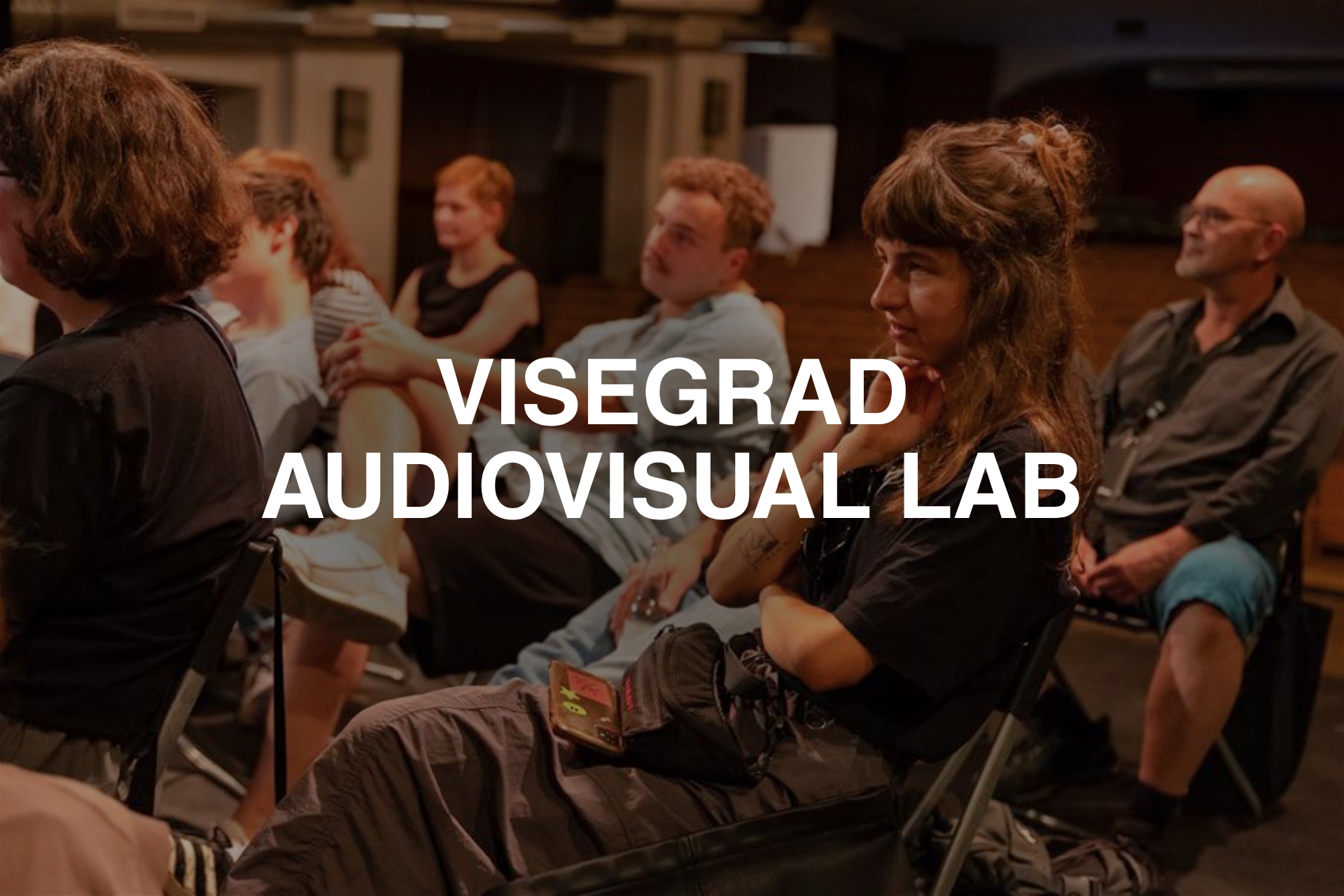
Visegrad Audiovisual LAB is a continuous project dedicated to sharing and developing audiovisual education in the V4 countries. Alongside educators, cinema exhibitors, cultural professionals, and filmmakers, we explore ways to organically incorporate film, audiovisual media, and European film production into education, audience engagement, and the day-to-day programming of cinemas and cultural institutions.
Visegrad Audiovisual Literacy Toolkit
September 28, 2026 – November 30, 2026
The first project output will be an open working version of the Toolkit, published in September 2026 and further tested throughout the project. It will be a practical package of recommendations, activities and tools for developing audiovisual literacy across the V4. The Toolkit will focus on digital media beyond film, critical thinking, education outside major cities, and the inclusion of people with fewer professional, social or cultural opportunities. The introductory section will provide a working definition of film and audiovisual literacy, key concepts, and approaches to working with children, young people and seniors.
The primary target groups are preschool, primary and secondary school teachers, cinema professionals working with children or seniors, and audiovisual creators, particularly producers and directors. Secondary target groups include preschool children (5–6), children (7–11), young people (12–18) and seniors (60+).The timeline foresees publication of the open version in September 2026, testing and feedback collection in October 2026 through activities in SK, PL and HU, and dissemination of the final version together with the closure of the open phase in November 2026, followed by multiplier workshops in CZ. The Toolkit will be developed by a V4 expert team, with one methodology specialist representing each country.
Visegrad Audiovisual Literacy Days Bratislava: From Teachers to Creators
(date to be announced)
The Slovak partner will prepare two V4 peer-to-peer workshops in Bratislava focused on education, testing and further development of the working version of the toolkit for teachers and creators. The primary target groups will be teachers from Bratislava and other Slovak regions, working with children aged 7–11 and youth aged 12–18, as well as audiovisual creators and students of film and media studies, focusing on children, youth and seniors.
The first workshop will be designed for teachers and will focus on working with children and youth in the context of film and audiovisual literacy. Participants will test selected parts of the toolkit, share experience from the school environment and verify its use in teaching, screening preparation, reflection sessions and classroom work. The second workshop will be designed for creators and film/media students. It will focus on creating and communicating audiovisual content for children, youth and seniors. Participants will work with the toolkit from the perspective of creative practice: how to prepare a film, excerpt, discussion, accompanying material or educational activity for specific target groups. The workshops will be led by two V4 experts: one from education and one from audiovisual creation, film education and audience engagement. At the end, both groups will meet to compare the needs of schools, creators and students, identify the strengths and weaknesses of the toolkit and formulate recommendations for its revision.
Visegrad Audiovisual Literacy Days Budapest: Heritage, Archives and Audiovisual Literacy
October 22, 2026 – November 1, 2026 (date to be specified)
The activity will connect audiovisual literacy, film heritage, archival films, cinemas, festivals, educational platforms, and schools. Through two workshops, it will explore how archival materials can be used not only as historical content but also as a tool for developing film language, critical thinking, cultural memory, and intergenerational dialogue. The primary target groups are teachers (focusing on preschool children), cinema professionals, festival representatives, and educational and cultural platforms (focusing on preschool children, children).
The workshops will build on the working version of the toolkit and serve as thematic testing activities. Participants will work with archival film excerpts and explore their use in education, cinemas, festivals, accompanying programmes, and discussions. The first workshop will focus on teachers and the educational use of archival materials, historical and media contexts, reflection, and audience engagement. The second workshop will focus on cinema professionals, festivals, and educational platforms, addressing programming, communication of archival films, screening preparation, accompanying activities, and engagement of young and older audiences. The workshops will be led by two experts: one from the education sector and one from the fields of cinemas, festivals, and film education. The outcome will be a set of recommendations for the selection, presentation, and educational use of archival films.
Visegrad Audiovisual Literacy Days Warsaw: Schools, Creators and Audiovisual Literacy
October 17, 2026 & October 31, 2026
The activity will be divided into two parallel workshops focused on connecting schools, creators and educational institutions, and on testing the working version of the toolkit. The primary target groups will be teachers and audiovisual creators. Teachers will work with secondary target groups: preschool children (5–6), children (7–11) and youth (12–18), especially from the perspective of using film and audiovisual content in teaching, preparing screenings, working with excerpts, leading reflection and formulating questions about film. Creators will work with the same secondary target groups, as well as seniors, from the perspective of creation, communication and educational activities.
The workshop will focus on how creators can contribute to audiovisual literacy, speak about the creative process, prepare discussions, masterclasses, film materials or accompanying programmes for children, youth and seniors. Participants will test how the toolkit can be used in preparing educational activities in distribution, promotion, discussions with creators, work with excerpts and accompanying materials. The workshops will be led by two V4 experts:one from education and one from audience engagement, film education and cultural practice. Both workshops will work with recommendations for cooperation across the V4.
Visegrad Audiovisual Literacy & Audience Design Days Prague
November 6, 2026 – November 7, 2026
The workshops will take place during BOO International Short Film Festival. The programme will focus on the practical use and dissemination of audiovisual literacy and audience design across the V4 region. The Prague output will be designed as a dissemination-oriented workshop series, turning participants from different target groups and all four V4 countries into trained audiovisual literacy multipliers and skilled Toolkit users. By bringing these groups together, the output will build on previous activities and strengthen the Toolkit’s multiplication effect. The programme will consist of six workshops, five with a multiplier focus.
The first part will include three audiovisual literacy workshops for teachers, cinema professionals, cultural workers and other educational stakeholders. Participants will explore how to explain audiovisual literacy, translate it into practice, use the Toolkit and share experience with colleagues. The second part will include two audience design workshops: one for creators and producers, and one for cinema professionals and cultural organisations. They will focus on understanding audiences, target groups including seniors, communication, accessibility and long-term audience relationships. Days will conclude with a joint data workshop for all participants, organised as round tables, addressing databases, surveys, feedback and evaluation.
Visegrad Audiovisual Literacy Online
November 9, 2026 – November 30, 2026
The product will build on the final version of the Toolkit published in November 2026. It will consist of a series of four practical online lessons that will help further disseminate the Toolkit, explain it, and demonstrate its practical use. It will not be a separate theoretical platform, but an accessible educational and dissemination tool for participants and the wider professional public across the V4 region.
The lessons will focus on the project’s main professional target groups: teachers, cinema operators, creators, and data work. Teachers will learn how to use audiovisual literacy in education, when working with film, and in reflection and discussion with students. Cinema professionals will gain inspiration for educational and accompanying programmes, cooperation with schools, audience work including seniors, and the development of cinemas as spaces for audiovisual education. The lesson for creators and producers will show how to speak about the creative process and film language, and how to prepare accompanying materials for schools, cinemas, and audiences. There will also be a lesson that will focus on data, databases, surveys, feedback, and evaluation in cultural and educational practice. The product will extend the project’s lifespan and enable further dissemination of outputs through partners, newsletters, schools, cinemas, festivals, and professional networks across the V4 region.
Partners:
Boiler (SK)
Centrum Kultury Filmowej im. Andrzeja Wajdy (PL)
Nemzeti Filmintézet Közhasznú Nonprofit Zrt – Filmarchívum Igazgatóság (HU)
The project is co-financed by the governments of the Czech Republic, Hungary, Poland, and Slovakia through Visegrad grants from the International Visegrad Fund. The fund’s mission is to support the principles of sustainable regional cooperation in Central Europe.